UK-based content creator British Avgeek has released a focused and technically rich tutorial exploring complex RNP operations in Microsoft Flight Simulator 2024, featuring the FSS E-Jets package and specifically the Embraer E195 variant.
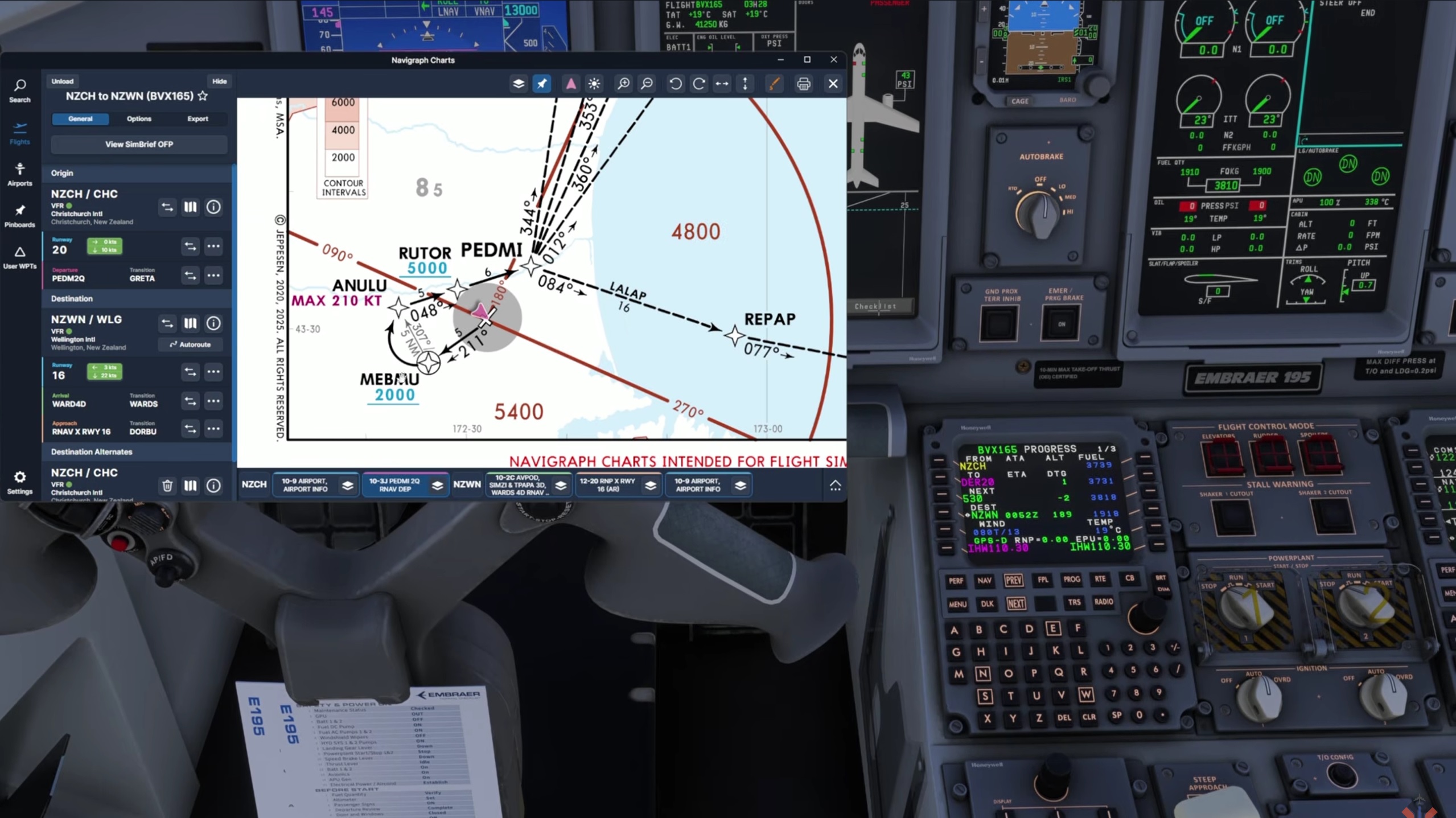
In the video, viewers are taken on a demanding RNP Runway 16-X arrival into Wellington (NZWN), departing from Christchurch (NZCH). The approach into Wellington is well known among real-world and virtual pilots for its terrain constraints, tight tolerances, and curved RF legs that require disciplined lateral and vertical path management.
Precision RNP in Practice
The tutorial dissects:
- Correct FMS setup for RNP procedures
- Management of RF (Radius-to-Fix) legs
- Differences between standard RNAV/GPS and true RNP operations
- Cockpit flow tailored to the tighter navigation performance requirements
RNP (Required Navigation Performance) approaches demand a higher degree of accuracy than conventional RNAV procedures. The E195’s ability to track complex curved segments into Wellington’s challenging terrain environment provides a strong test case for avionics fidelity within the FSS implementation.
Interestingly, the video originated as an internal experiment. British Avgeek initially set up the scenario to evaluate whether the experimental build of the FSS E-Jets could handle the precision demands of the procedure. After achieving a successful result, the test evolved into a structured tutorial for the wider community.
Watch the full video here:
Operational Context
Flight Details
- Simulator: Microsoft Flight Simulator 2024
- Aircraft: FSS E195 (Embraer E-Jet series)
- Departure: NZCH – Christchurch
- Arrival: NZWN – Wellington (RNP RWY 16-X)
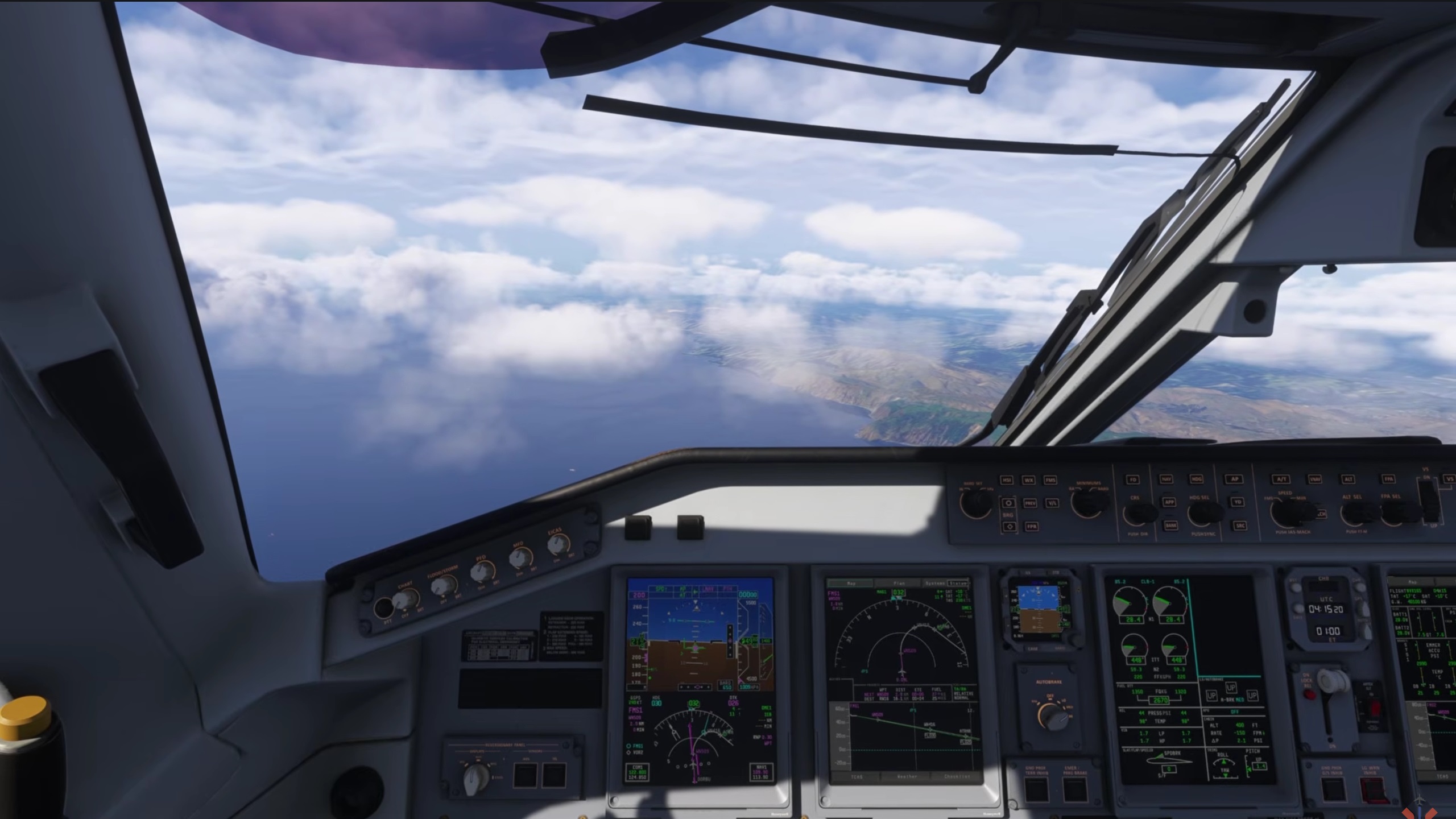
The combination of New Zealand’s dramatic coastal terrain, low cloud layers, and curved final segment makes this a visually compelling and technically demanding scenario.
For E-Jet pilots seeking to deepen their understanding of advanced lateral navigation and high-precision arrivals, this tutorial offers a practical walkthrough grounded in real procedural logic rather than simplified autopilot usage.